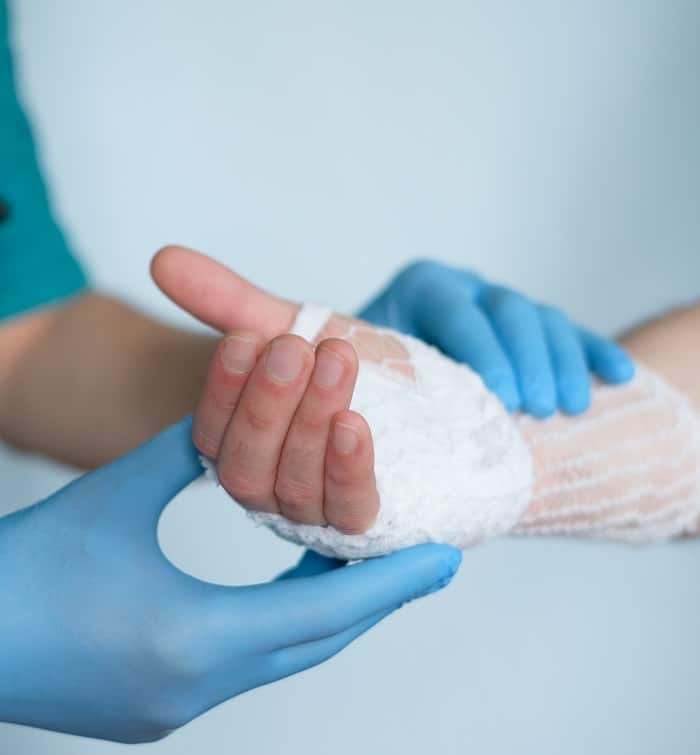
Our hands are an extremely important body part in our daily lives. Traumatic injuries of the hand are very common, since we use our hands constantly in our work, play, and daily living. When a hand is injured, restoring its function and appearance as close to normal as possible is a high priority.
Dr. McCue has specific training and experience that enable him to perform surgery for traumatic hand injuries. He also performs some elective hand surgeries on referral from other physicians.
Most of us take our hands for granted, never thinking about the structures that make them work so well. Your hand is a complex part of your body, with multiple tendons, muscles, nerves, and blood vessels, all crowded into a small area. Smooth, precise function of all of these parts is needed for every hand movement and function. When hands are injured, this complex balance is disrupted. Scar tissue, nerve damage, damaged or severed tendons, and other injuries are common issues hand surgeons face when repairing an injured hand.
What is Hand Surgery?
Hand surgery requires intimate knowledge of human hand anatomy and a wide range of surgical skills, including microsurgery. Specialized training is also needed to achieve the goal of any hand surgery: restoring normal function as far as is possible. If you are referred to Dr. McCue for hand surgery, he will bring all his training and experience to bear to achieve the best possible outcome.
What to Expect During Your Consultation
Dr. McCue will discuss the surgery with you and will explain what he will be doing in your surgery. As accurately as possible before surgery, he will describe the likely outcomes. He’ll also explain issues that may alter the outcome, so you’ll be fully informed.
Injuries That Typically Require Hand Trauma Surgery
Patients may need hand trauma surgery for various injuries, including:
-
Bone Injuries: Fractures or dislocations that compromise bone alignment
-
Nerve and Tendon Trauma: Nerve and tendon lacerations that affect sensation and movement
-
Burns: Burns that may cause soft tissue damage and scarring
-
Crush Injuries: Hand injury that happens at a high velocity, for example, in an auto or machinery accident.
-
Cuts: Deep cuts can damage skin, the underlying soft tissues, or even bone.
Without prompt treatment, these types of hand injuries could lead to long-term disability, chronic pain, or loss of motion. We need our hands daily for routine activities, so that a non-functional hand can be a serious disability. Surgery can help restore the affected hand’s strength, mobility, and function.
Why Choose McCue Plastic Surgery for Hand Reconstruction
At McCue Plastic Surgery, hand reconstruction is approached with a focus on restoring both function and appearance whenever possible. Dr. Jonathan McCue is a board-certified plastic surgeon with advanced training in reconstructive surgery and experience treating complex injuries and conditions affecting the hands. He understands how important hand mobility, strength, and comfort are to daily life and works closely with each patient to create a personalized treatment plan.
Dr. McCue is committed to evidence-based care, honest communication, and thorough patient education throughout the reconstructive process. Patients throughout Minneapolis and St. Paul trust McCue Plastic Surgery for compassionate care, meticulous surgical planning, and a patient-centered approach focused on helping individuals regain confidence, comfort, and quality of life.
Hand Trauma Surgery FAQs
Hand trauma surgery restores both function and aesthetics through procedures such as:
- Fracture Stabilization: Realigning broken bones using plates or screws
- Tendon Repair: Reconnecting severed tendons to restore movement
- Nerve Reconstruction: Microsurgical techniques repair damaged nerves
- Skin Grafting or Tissue Transfer: Replacing lost tissue to improve function and appearance
Dr. McCue tailors each procedure to the patient’s unique needs for optimal outcomes.
Microsurgery is a highly specialized surgical approach in which Dr. McCue uses high-powered magnification to view and repair small blood vessels, nerves, and tissues. It is essential for:
- Reattaching severed fingers or limbs
- Restoring blood flow to injured areas
- Minimizing nerve damage and improving sensation
- Enhancing precision in reconstructive procedures
Dr. McCue’s microsurgical skills ensure a high success rate in restoring hand function.
Recovery from hand trauma surgery depends on the extent of the trauma and the specific injury. Minor injuries may heal within a few months, while moderate and severe injuries may take many months to fully recover. Physical therapy is integral to the healing process because it can help you reestablish hand movement and function.
Most patients benefit from physical therapy, which focuses on:
- Restoring strength and flexibility
- Reducing stiffness and scar tissue formation
- Improving coordination and dexterity
A structured therapy program is crucial for regaining full hand function.
Yes. In addition to trauma surgery, Dr. McCue performs elective hand procedures for conditions such as carpal tunnel syndrome, trigger finger, and arthritis-related deformities. These surgeries help patients improve hand function and reduce discomfort.
As with any surgical procedure, risks include:
- Infection
- Nerve damage
- Stiffness or loss of motion
- Scar formation
Dr. McCue takes every precaution to minimize risks and ensure a smooth recovery. His high-level, specialized surgical skills, combined with the most advanced technology, lay the groundwork for the best possible results.
Before your consultation, it’s helpful to:
- Gather medical records related to your injury
- Make a list of symptoms
- Consider and list the ways that your hand function affects daily life
- Prepare questions about surgical options and recovery
Dr. McCue will evaluate your condition, discuss your goals, and create a personalized treatment plan.
Restore Function of Your Hands with Hand Trauma Surgery in Minneapolis, MN
Dr. Jonathan McCue offers expert care at McCue Plastic Surgery in Plymouth, MN for patients in the Minneapolis–St. Paul area. Call (952) 830-0089 to schedule your consultation.